
What are Blood Sugars Hormones?
Blood sugar regulation
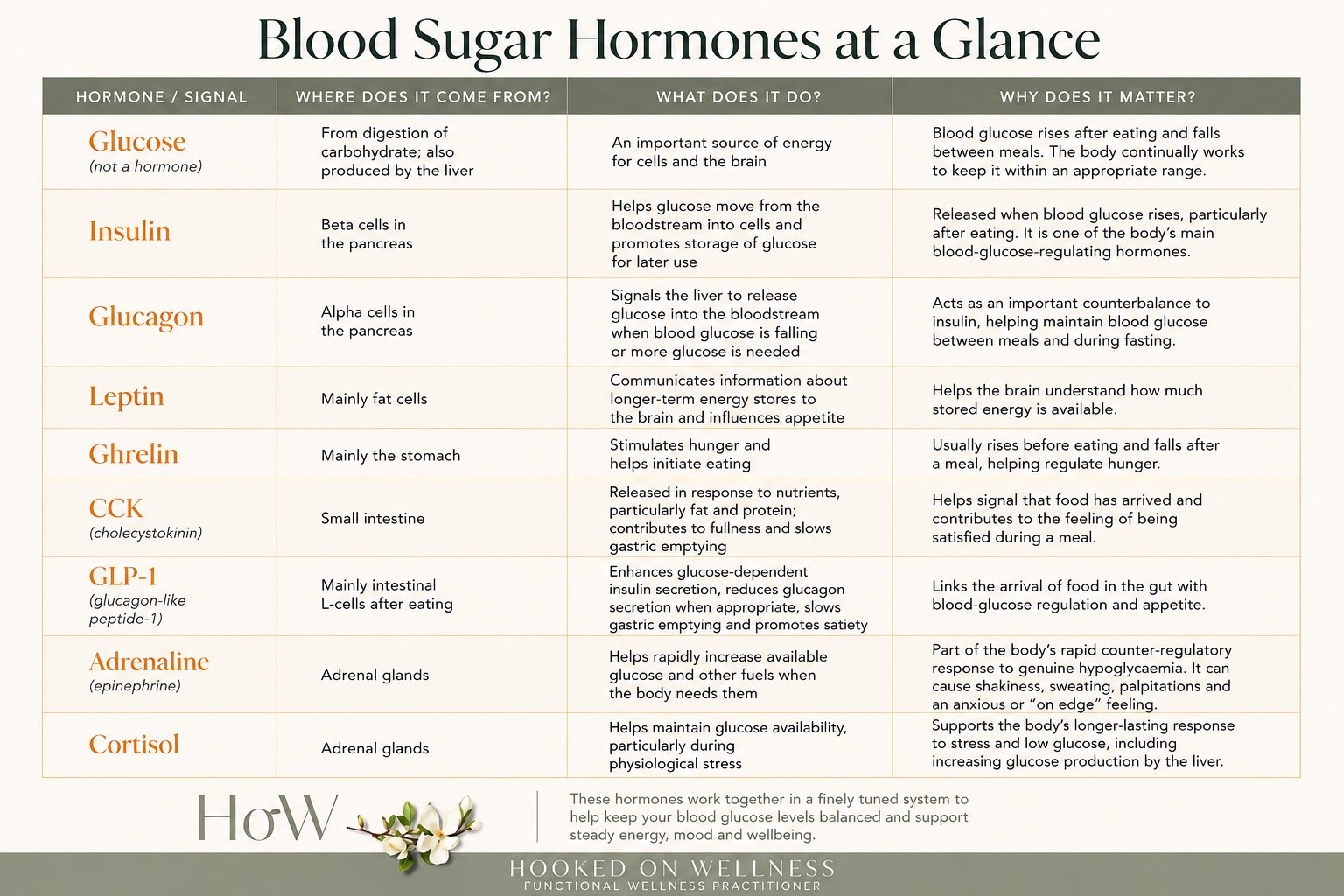
Blood sugar regulation isn't controlled by insulin alone. It involves a coordinated network of hormones that help regulate blood glucose, hunger, fullness, energy availability and our response to low blood sugar. Think of regulation like an orchestra. Everyone has their role to play within the group. The main players in our blood sugar regulation orchestra are: the gut, pancreas, brain, liver, adrenal glands and fat tissue. Each of them has a job to do.
They work together
After we eat, glucose rises and insulin helps manage that glucose. At the same time, signals from the digestive system (including CCK and GLP-1) communicate with the brain and digestive tract about the nutrients arriving and contribute to feelings of satiation and satiety. Ghrelin generally decreases after eating, while leptin provides information about longer-term energy stores.
At the other end of the system, if blood glucose becomes genuinely too low, the body has protective counter-regulatory mechanisms. Adrenaline acts relatively quickly, while cortisol has slower effects that help make fuel available
Insulin and glucagon are two of the body's principal hormones for regulating blood glucose. Insulin helps bring glucose down when it is elevated, while glucagon helps bring it back up when it is falling.
Alongside them, hormones from the gut, brain, fat tissue and adrenal glands help regulate hunger, fullness, energy availability and the body's response to stress.